
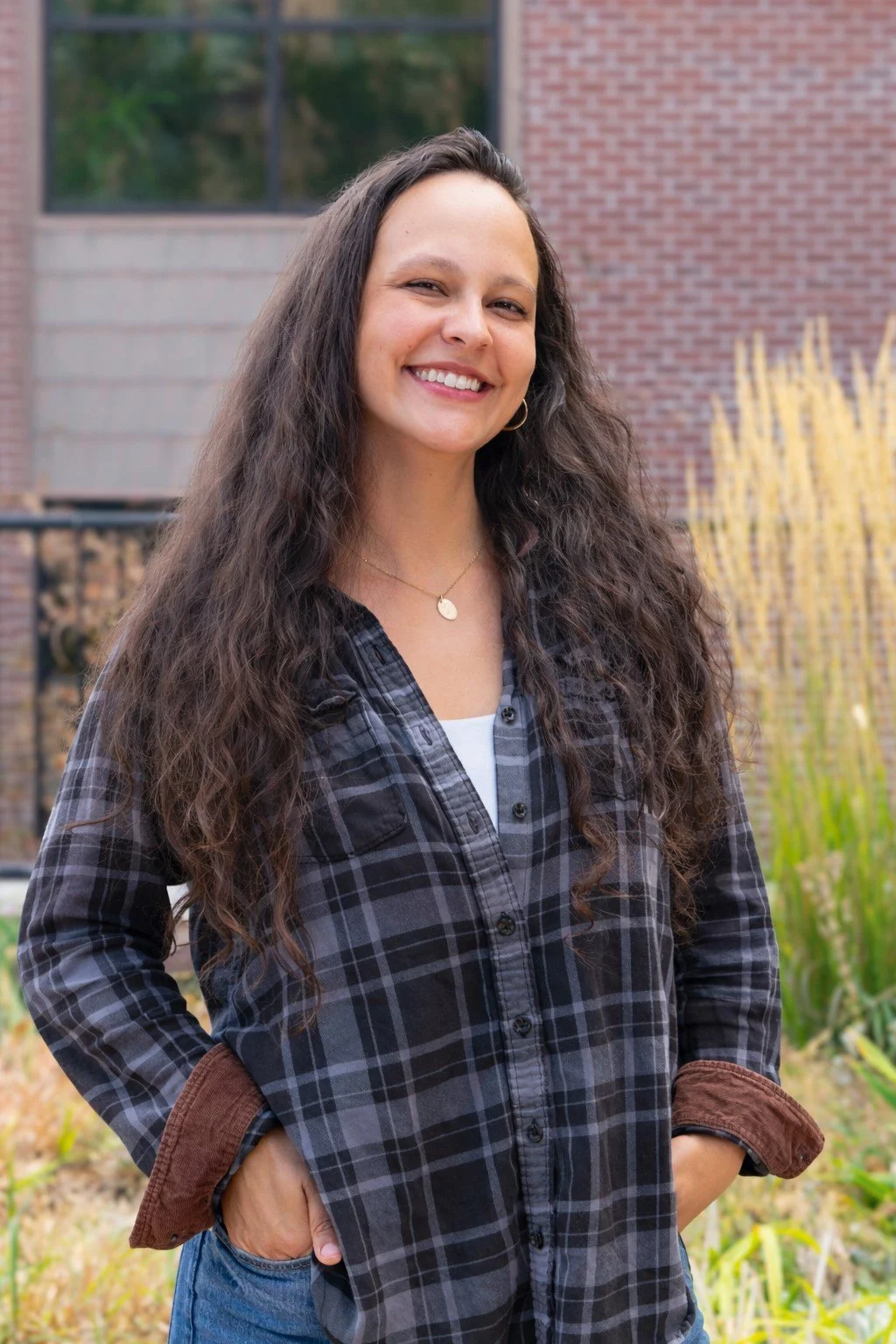
jasmine vilar
Development Director
Profile by Robin Brodt
Connecting communities to nature
Jasmine Vilar wears a lot of hats at The Lands Council. As the Development Director, she's a grant writer and administrator, and guide — with her TLC colleagues — across all programs and field projects, but her passion is for environmental education.
Along with her post-grad Environmental Education certification from Hamline University and a master’s in natural resources from the University of Idaho, Jasmine’s psychology background from Western Washington University gives her a unique edge — helping her connect with students and make the outdoors feel personal and approachable.
nature connect
The project closest to her heart is Nature Connect, a program she is helping build to help school-age children discover the outdoors and all it has to offer. She partners with Refugee & Immigrant Connections Spokane (RICS), a local nonprofit that serves the city’s refugee and immigrant communities.
In Spokane, many residents grow up with a deep connection to the forests, rivers, and mountains that define the region. For newly arrived families, though, that connection can feel out of reach. Language barriers, economic hardship, and social isolation often keep them from accessing the same outdoor spaces that many locals take for granted.
Jasmine understands that struggle firsthand. Her father immigrated from Iran, and she remembers how hard it was for her family to participate in Spokane’s outdoor culture. “My family didn’t have the money, time, or even know-how for figuring out getting connected with the outdoors, taking ski lessons, or buying outdoor equipment,” she said. “Many immigrant families are busy trying to survive and get established. It makes you feel isolated from your peers in school who grow up doing these activities.”
Now, through Nature Connect, Jasmine is helping today’s families bridge that same gap. With RICS providing transportation — and sometimes joined by Public Lands Director Adam Gebauer — she organizes trips to nearby natural areas the students can easily revisit later.
“I try to focus on places near the Spokane River or within 15–20 minutes of downtown,” she said. “That’s realistically where most families and kids would be going.”
The outings are part education, part exploration — and all joy.
“The kids’ language abilities are all different,” Jasmine explained. “Some have been here since they were born and speak perfect English; others don’t know a lick yet. But what became clear right away was that they just wanted to be outside.”
She’s adjusted the program to meet them where they are. “I want them to walk away knowing one or two things about nature,” she said. “But the rest of the time, it’s about the experience — running around, picking up pinecones, seeing a squirrel and getting excited. They love animals.”
One of the most surprising moments for her came when several kids, who had lived in Spokane for years, didn’t recognize the name of the Spokane River. “That was eye-opening,” she said. “For them — and for me.”
Over the summer, Jasmine leads Nature Connect field trips, this time focusing on local ecology. “These students were English-proficient, so I wanted them to learn about our Ponderosa pines — they’re everywhere around us,” she said. “If they see how these trees support birds and how they’ve adapted to fire, maybe that knowledge helps them feel more at home here, more connected — and maybe more caring about the natural world.”
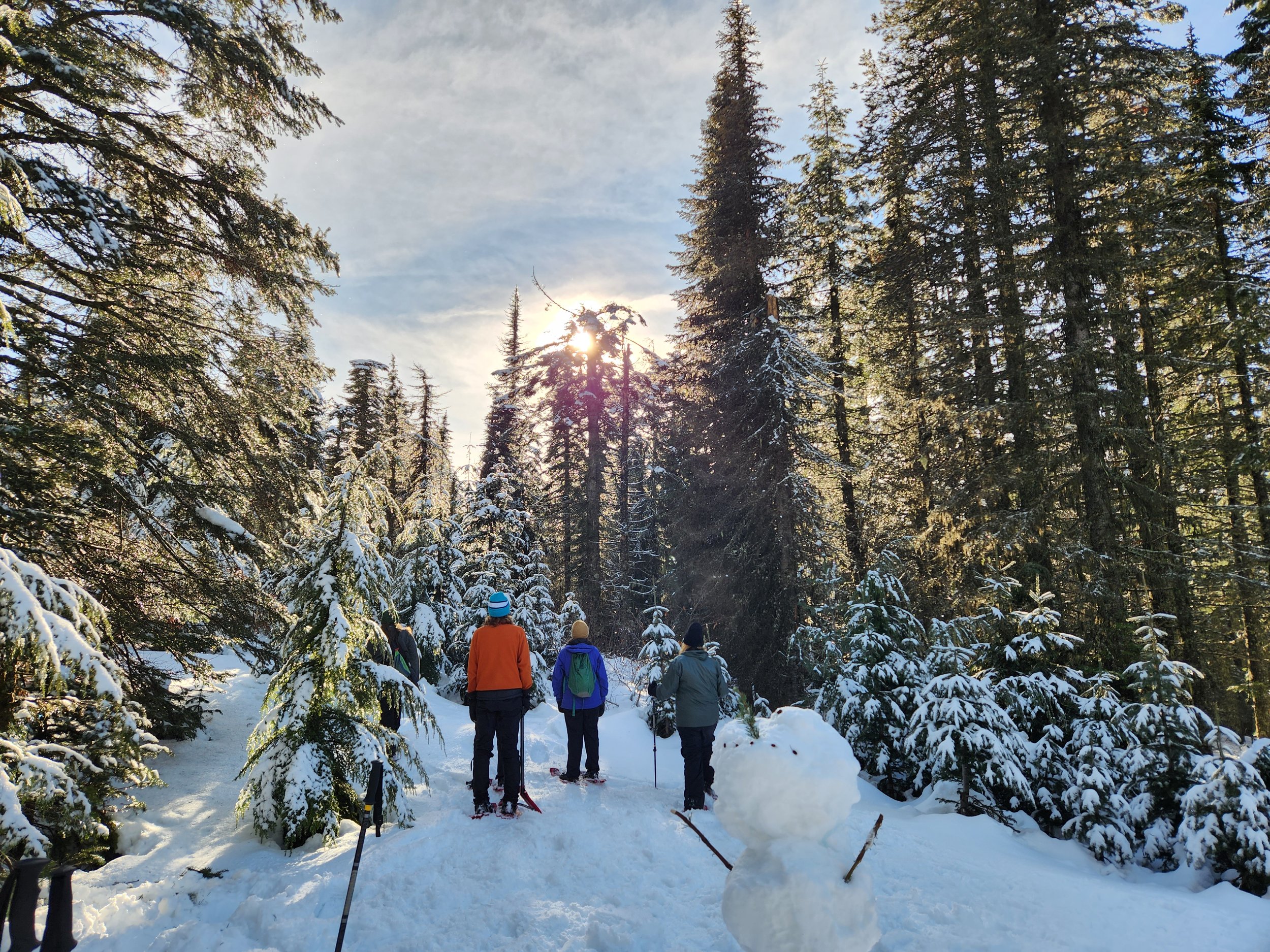
A group of students learning about mountain snowpack during a Nature Connect SnowSchool lesson
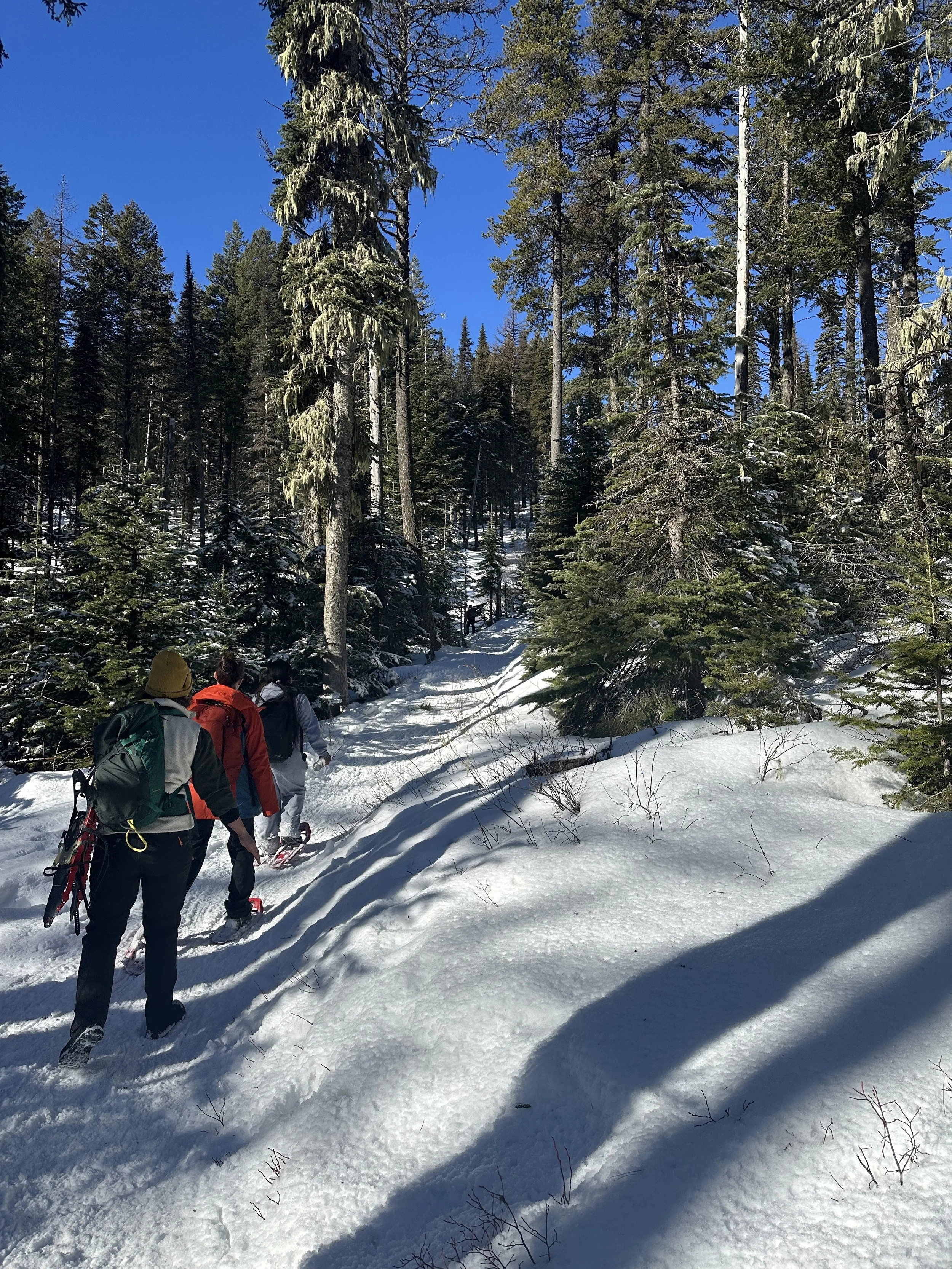
Jasmine and a group of students hiking Mt. Spokane
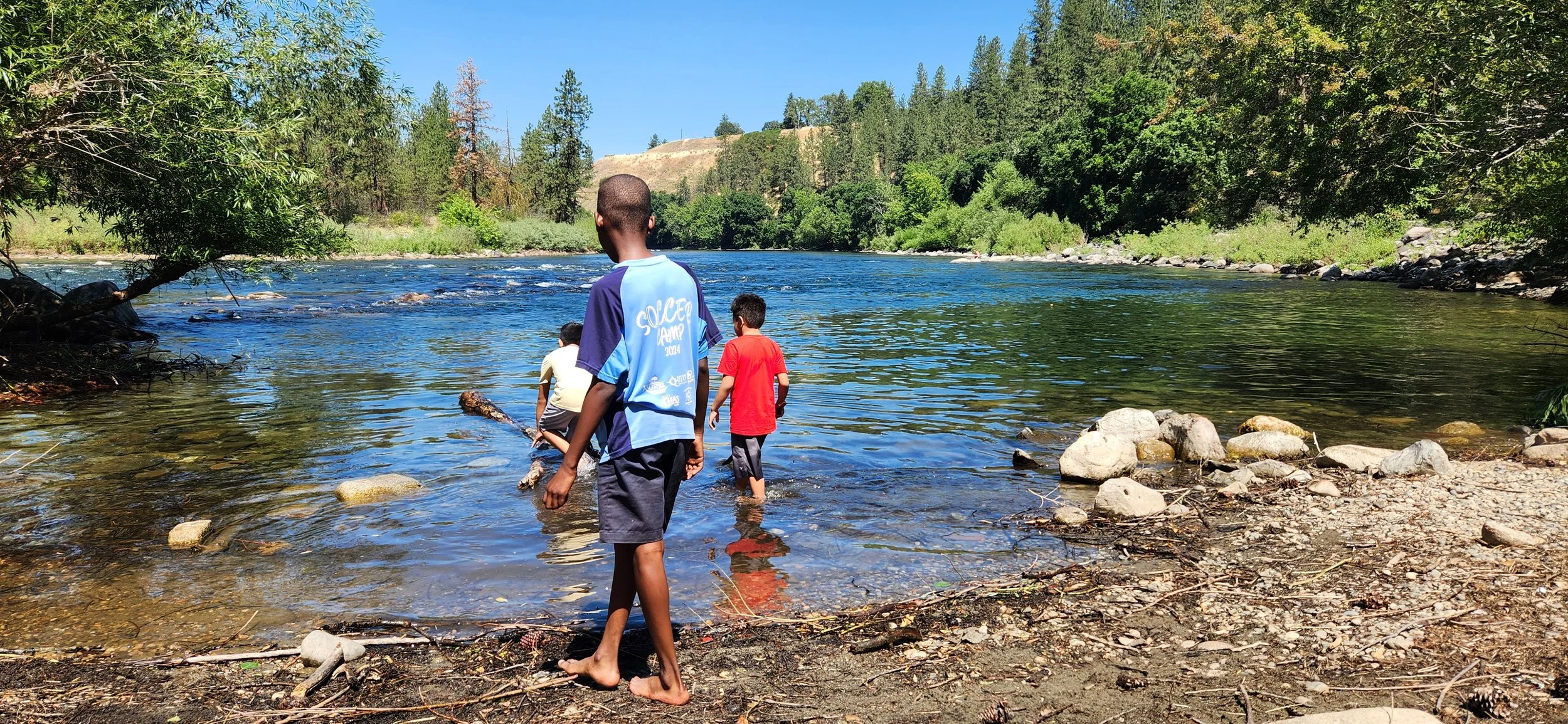
Nature Connect participants enjoying the Spokane River
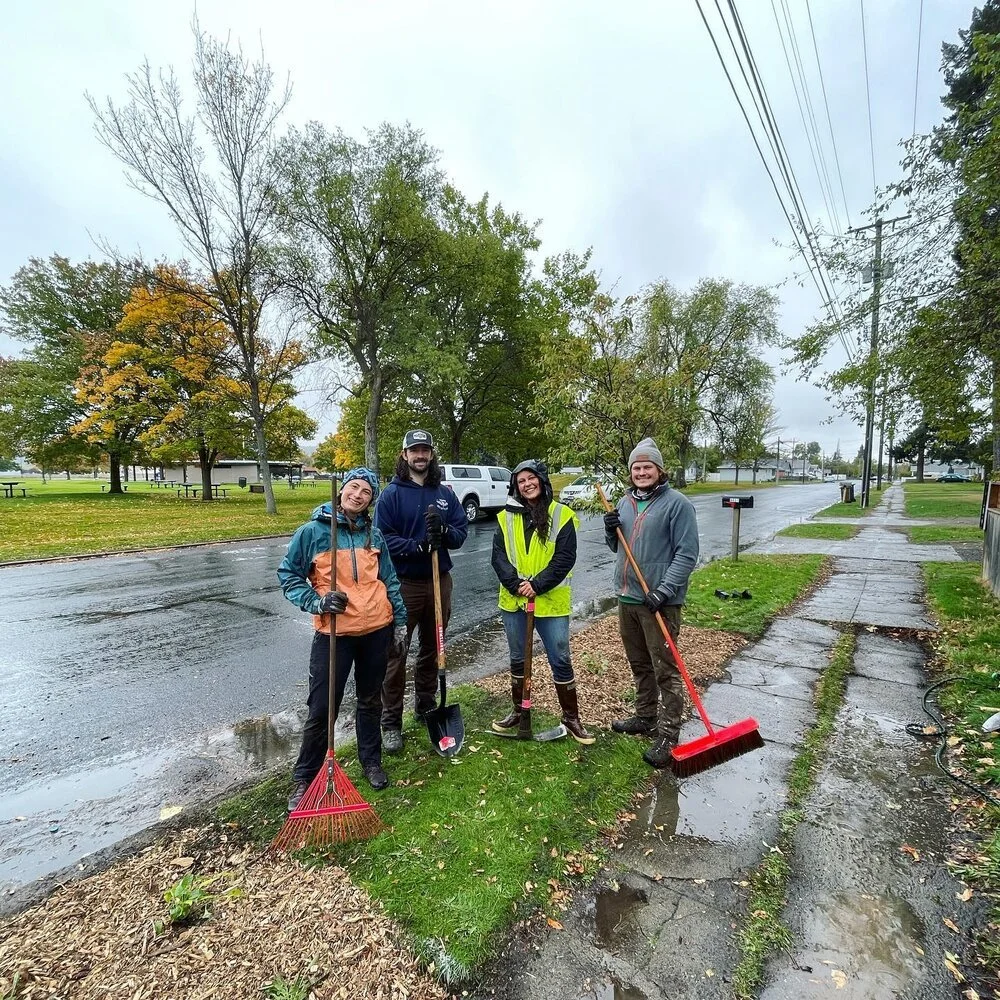
Jasmine and a group of SpoCanopy volunteers at a tree planting
Beyond Nature Connect, Jasmine collaborates closely with her other colleagues, like Justyce Brant, The Lands Council’s Urban Forestry Program Director, on SpoCanopy and CoolCanopy — initiatives that bring more trees to underserved neighborhoods.
SpoCanopy’s mission is to expand Spokane’s urban canopy by giving free trees to homeowners in low-income areas. Volunteers, often school-age students, plant them in public right-of-way plots, while the homeowners agree to care for them.
“The kids are the best workers,” Jasmine said, laughing. “They love digging and even get competitive to see who can plant the most trees.”
CoolCanopy extends those benefits beyond the city, offering trees to residents throughout Spokane County. Unlike SpoCanopy, these trees can be planted anywhere on a property — front, back, or side yards — broadening the reach of the program’s cooling and environmental benefits.
Behind the scenes, Jasmine also spends long hours writing grants and handling administrative work — the quiet, unseen side of conservation.
“Washington State has a big environmental education grant called No Child Left Inside,” she said. “It’s really competitive. On a whim, I applied — I didn’t think we’d get it. But we did. Our project ranked in the top three in the state for our tier and was only one of three to receive full funding. We were one of only six nonprofits selected this year.”
That funding will cover 10 to 12 guided outings over the next two years, ensuring that more refugee and immigrant students can experience the outdoors firsthand.
In today’s tight funding climate, Jasmine said, every grant counts. “These grants often pay out after the work is done, so if the funds aren’t there to pay workers, it’s chaotic,” she explained. “We’re always one or two steps behind. But Amanda Parrish, our executive director, somehow makes it work every year. She’s amazing.”
Grant writing may not be glamorous, but Jasmine knows it’s essential. “It’s hard, painstaking work, and most people don’t realize how much we rely on it,” she said. “People want to fund trees and rivers — the tangible stuff — but it’s really hard to get funding for the day-to-day operations that make that work possible.”
At the end of the day, Jasmine doesn’t do it for the attention.
“You’re not doing this work for recognition,” she said. “It’s a labor of love.”
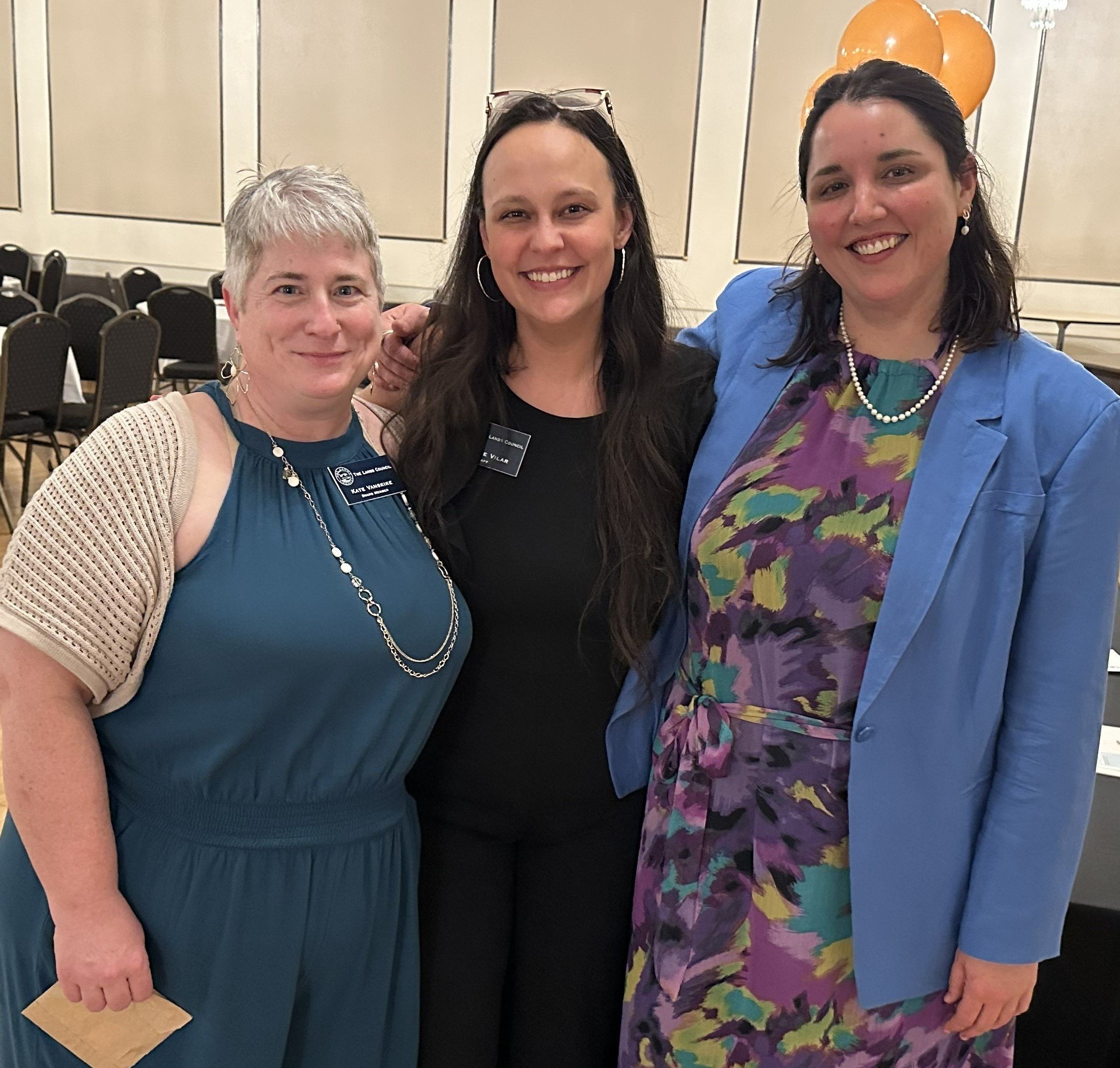
TLC Board President Kate Vanskike, Jasmine, and Executive Director Amanda Parrish
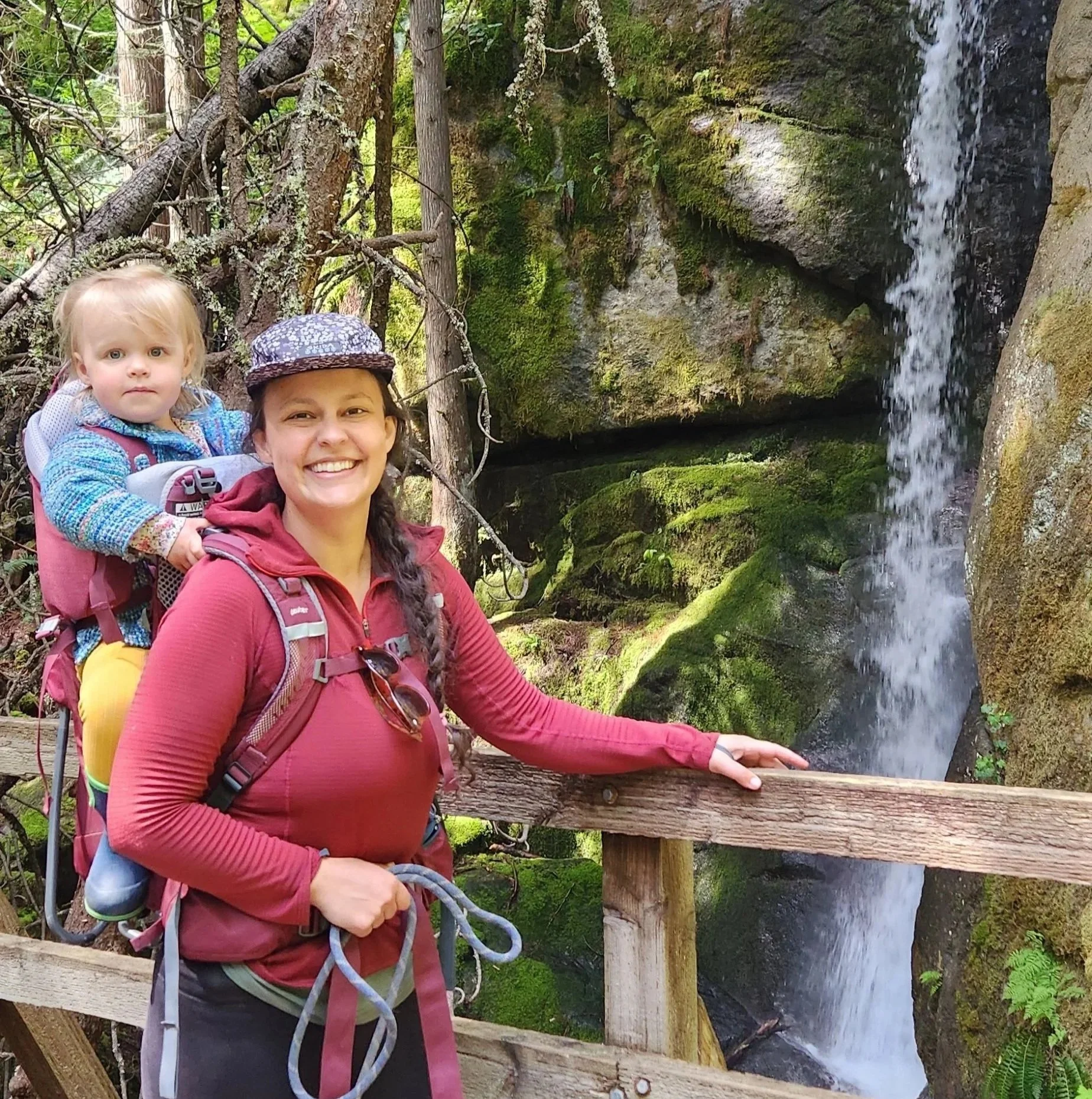
Jasmine and her daughter