kat hall
REstoration Program Director
Profile by Robin Brodt
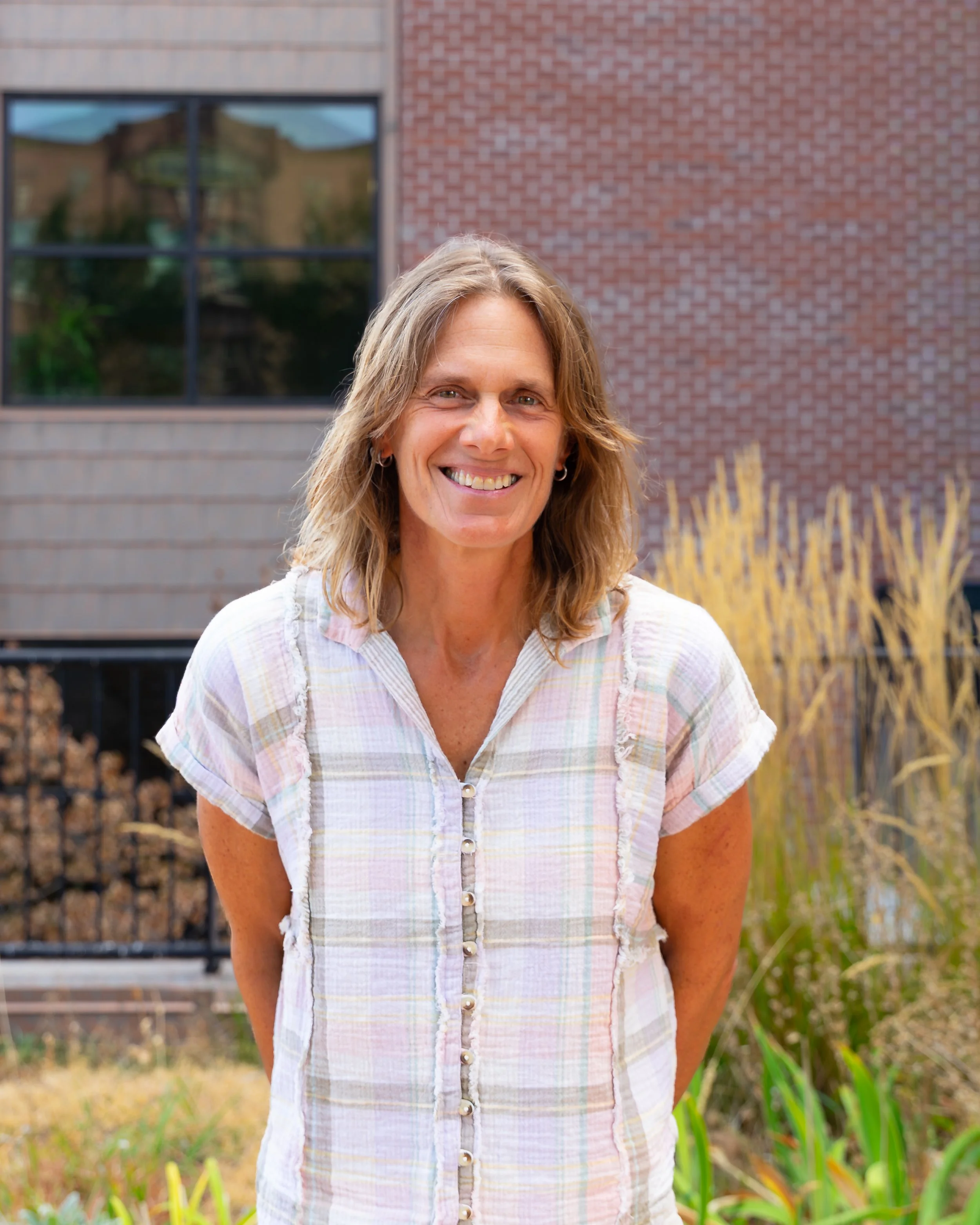
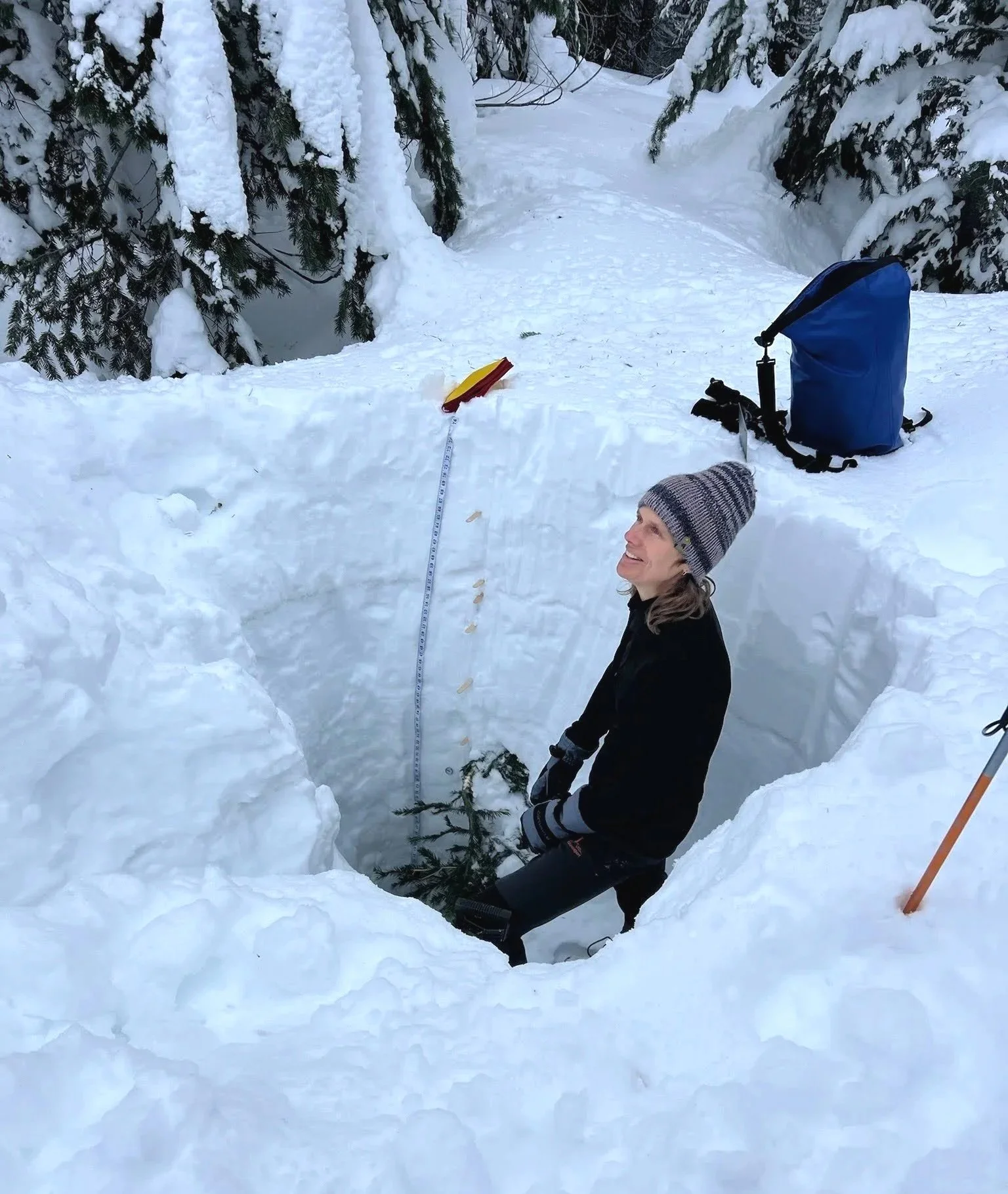
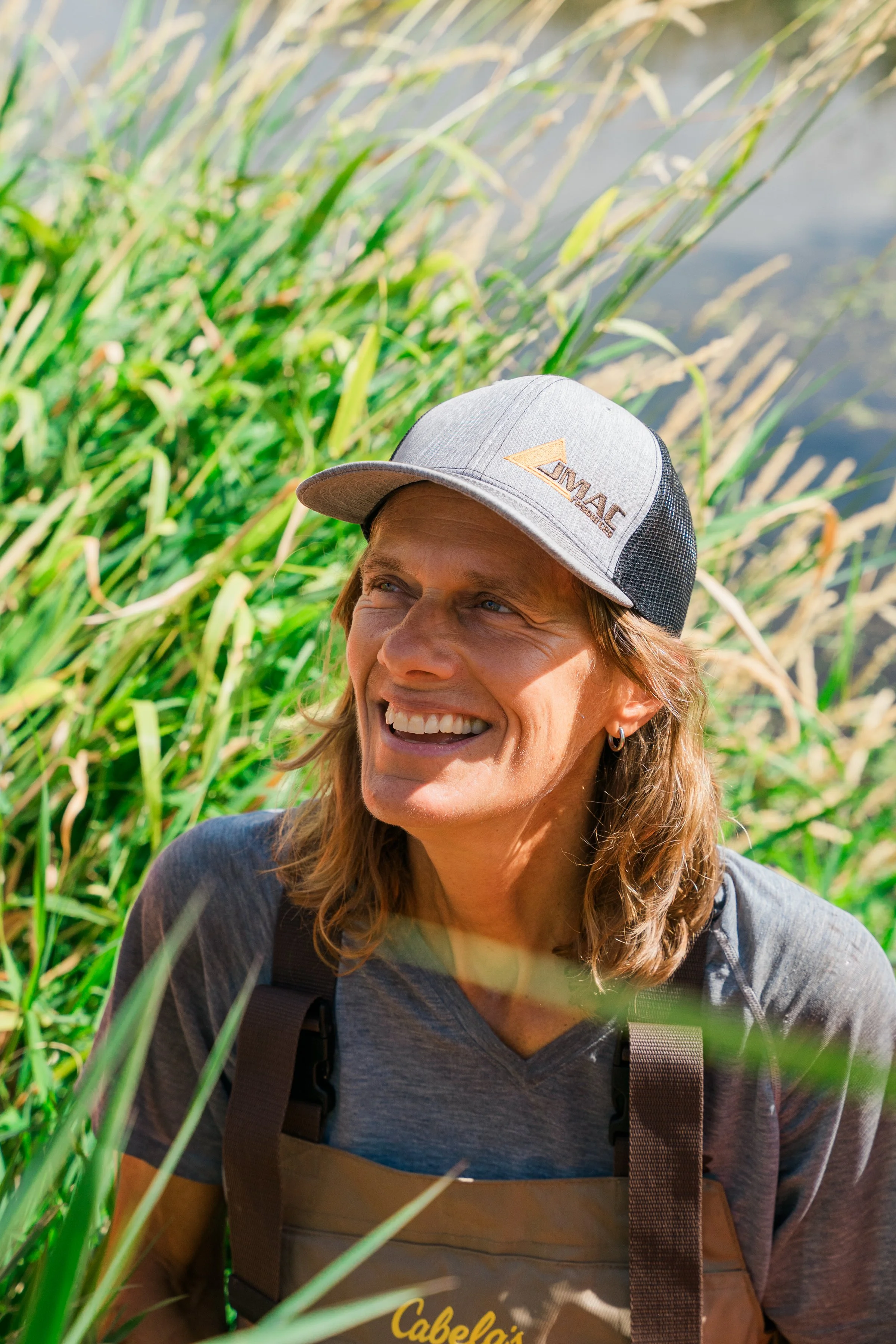
Perhaps the most exceptional thing about Kat Hall is her instinct for adventure — a useful trait when you’re running a tree-planting program, a SnowSchool unit on Mount Spokane, and a beaver dam analog program.
The Big stuff
Overseeing watershed restoration also means helping residents, landowners, business owners, and youth — essentially everyone — understand how the degradation of our water supply has affected daily life and local livelihoods. Past actions, and inactions, have created a situation that has harmed this most precious resource. Agricultural, forestry, and grazing practices, along with urban development, have significantly diminished Spokane’s water quality.
Educating people about the importance of protecting and restoring watersheds is only the first step; the second is taking action.
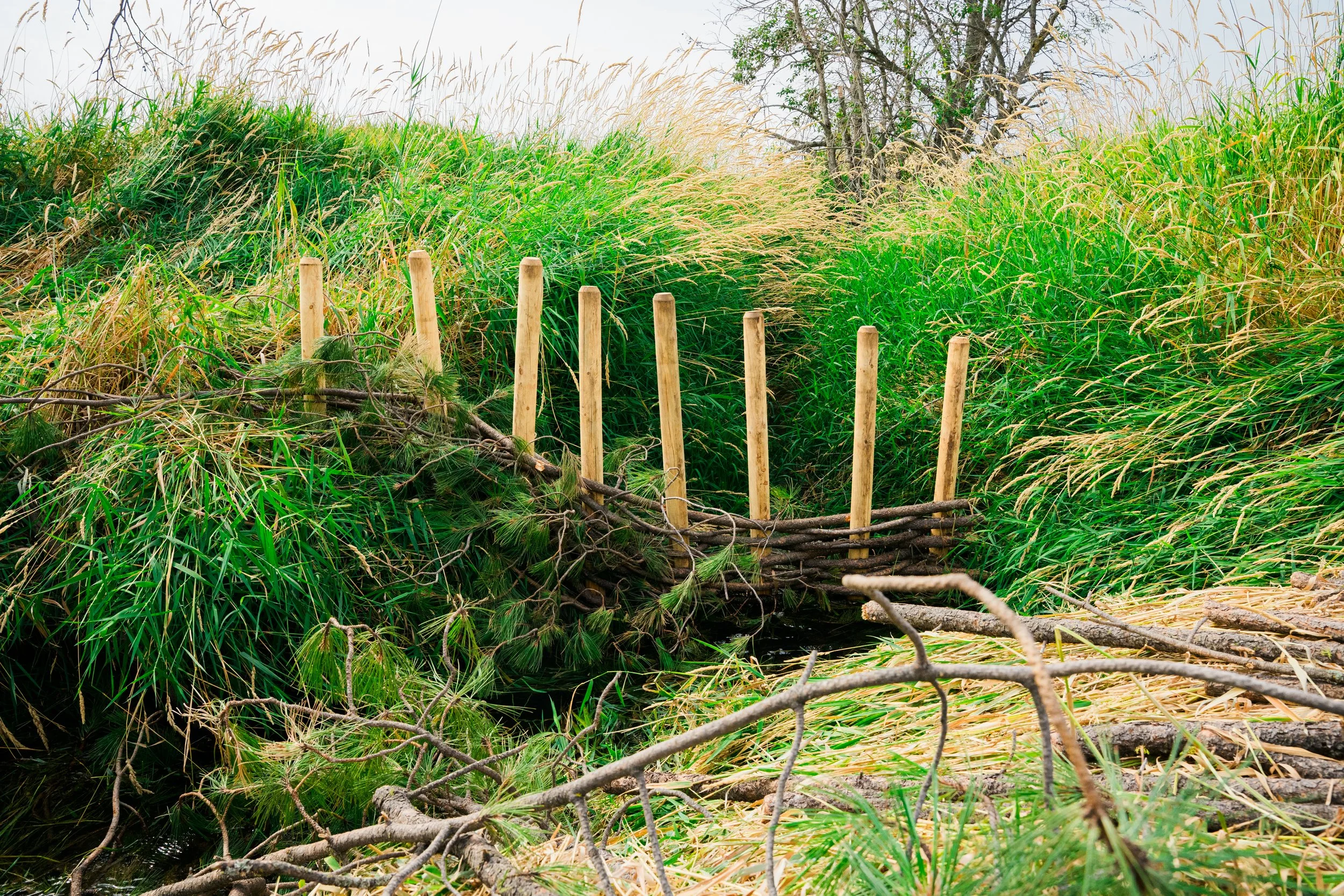
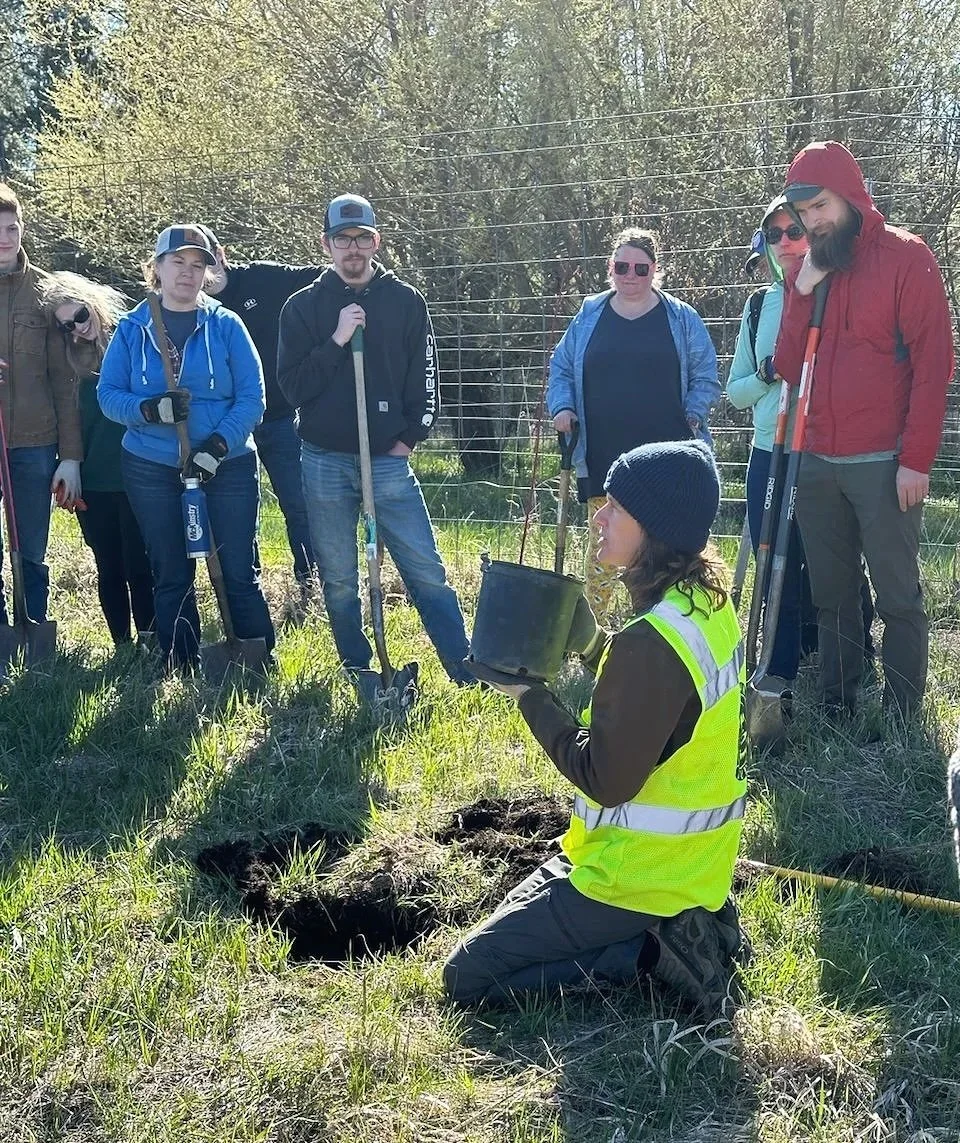
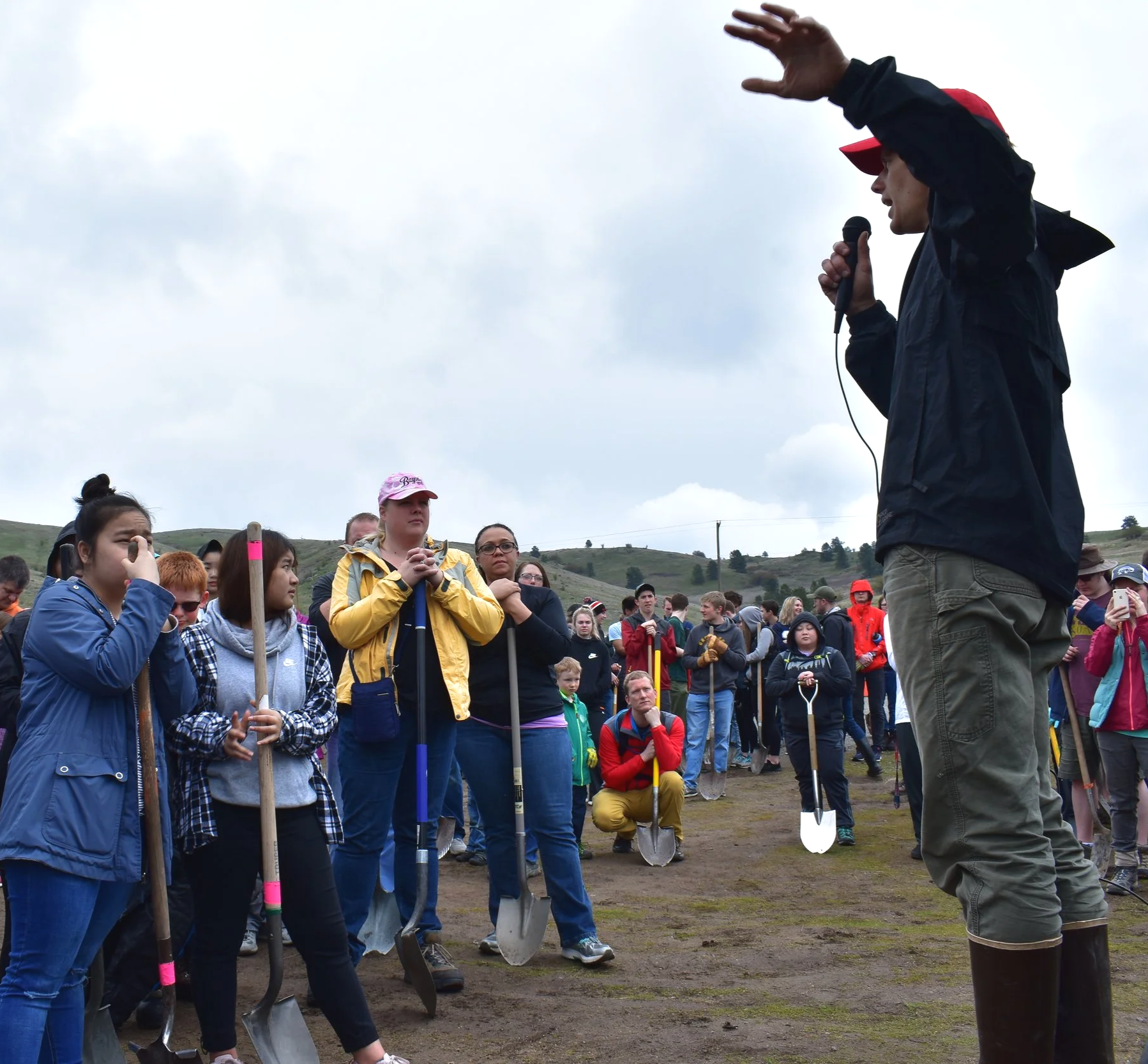
To improve water quality, Kat and her team recruit private landowners interested in implementing riparian restoration on their properties. With the help of hundreds of volunteers — including local students — they plant native trees and shrubs along streambanks to create buffers that reduce sediment loading. Sediment can carry pathogens, pollutants, and nutrients downstream into primary water sources. These buffers also cool streams by providing shade, create wildlife habitat, and limit livestock access, helping reduce fecal coliform bacteria. The beaver dam analogs built in tandem with these riparian buffers further trap sediment, promote aquifer storage, and help restore stream-channel geomorphology.
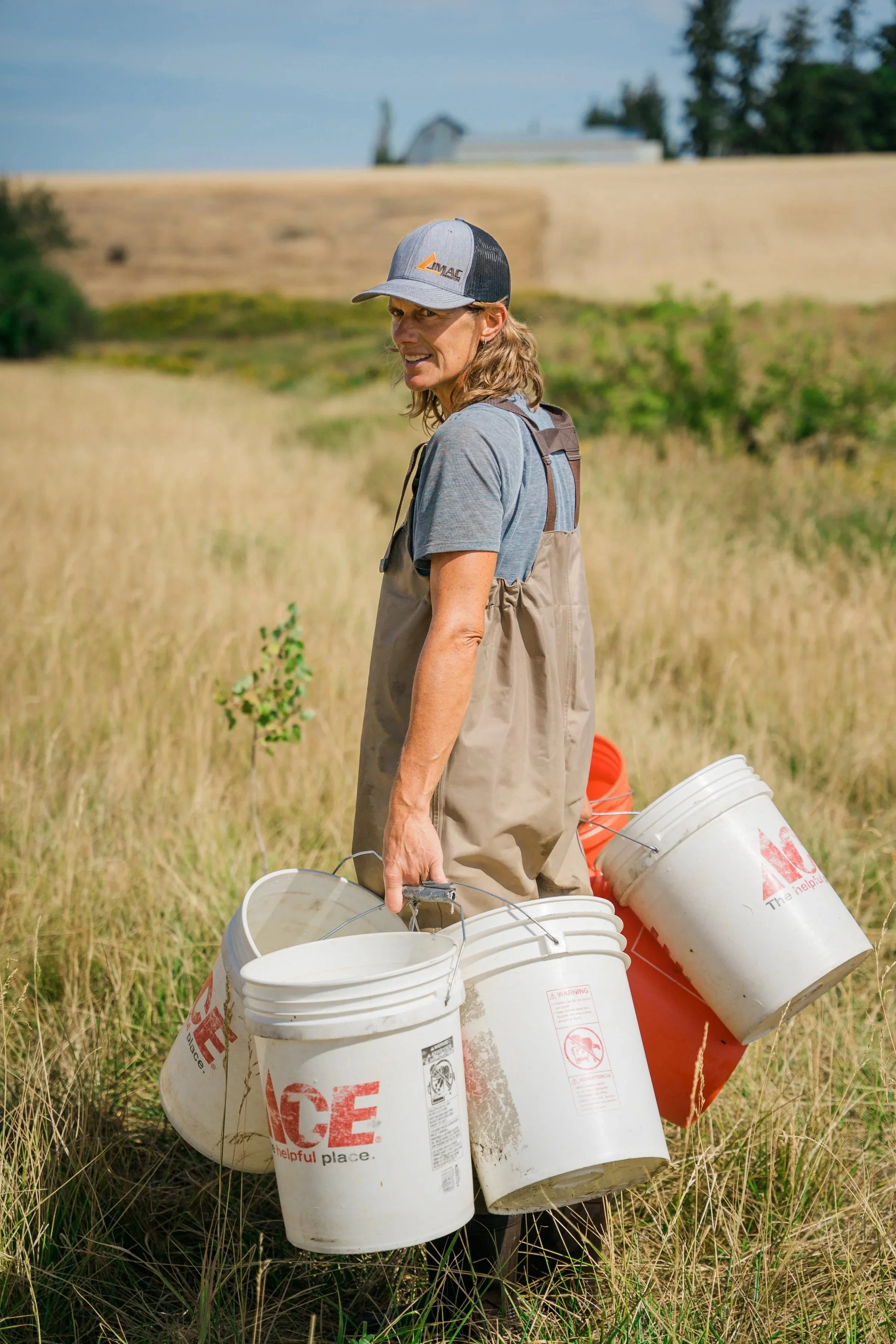
it’s all big stuff
How she came to this work is a story in itself.
Growing up on Long Island, N.Y., may not seem like the makings of a future environmentalist, but Kat’s natural draw to the outdoors proved stronger than geography. After earning a B.S. in Natural Resources from Cornell University in 1994, she joined the Peace Corps and traveled to Cameroon in West Africa.
“I served as an agroforestry extension agent, which had me working closely with small-scale subsistence farmers and planting nitrogen-fixing trees alongside crops to improve soil fertility, prevent erosion, create windbreaks and live fencing, and safeguard water catchments,” she recalled. Life in a small, remote village without electricity or running water was transformative. “This was the mid-90s. There wasn’t email, let alone cell phones or social media. It was a unique and life-changing experience, and I’m grateful for it. I wouldn’t trade it for anything.”
Next, Kat went to Juneau, Alaska, to work for the Southeast Alaska Guidance Association, leading AmeriCorps members, college students, and local and Native youth in trail maintenance and environmental education.
She found herself especially drawn to working with at-risk youth. “A lot of the kids were struggling with emotional or learning disabilities, substance-abuse problems, teenage pregnancy, domestic violence — all those awful things. I really enjoyed those kids and was honored to spend time with them.”
That experience continues to shape her work today. “We work with a lot of alternative high schools and middle schools at The Lands Council. It’s the same subset of kids, dealing with the same challenges. I’ve seen time and time again how the outdoors can change them. The students who struggle most in a classroom are often the ones who shine outside.
“As part of our SnowSchool unit, kids have to put on snowshoes — something they’ve never done — and hike a mile straight up a mountain. Many get almost no physical activity in their daily lives, so this hike is hard for them.”
Kat pauses to give kudos to her colleague, Urban Forestry Program Director Justyce Brant, who she says can “talk any kid up a mountain.” “These are the ones at the back of the line who are convinced they can’t do it — and Justyce gets them there. Once they reach the top, it’s transformative. They realize they can do hard things.”
“We’re giving kids opportunities that can change their lives,” Kat said. “That one experience can shift their path a little — and with more positive mentors and experiences, it can steer them away from a destructive track toward a healthier, more productive future.”
“Whenever we’re on the mountain, I try to stress the career piece by saying, ‘Hey, if you like what we did today, you can do this as a job.’”
“For kids — and volunteers of any age — getting out to a site to plant trees or build beaver dam analogs, getting their hands dirty and feet wet, and being around people who love this work … it gets them thinking differently about a river, a forest or a place.”
What Keeps Her Going
As demanding as watershed restoration, tree planting, and SnowSchool can be, Kat treasures the moments when she hears from students whose lives have shifted because of these experiences.
She received a letter several years ago from a student who wrote that Kat inspired her to pursue environmental science:
“You, KAT, have motivated me. You love your job and what you do for our Earth. I’ve never seen a glow like yours in my life! I’ve never seen someone so proud of what they do. I want to be proud of what I do too. If I keep up with my goals and stay focused, I will become a scientist and an activist working to make our Earth a better place for all life! I know I can do it. Thanks for your inspiration and for teaching us about biodiversity.”
“There’s no bigger praise,” Kat said.