
Spokane River

The Spokane River provides recreation and food for thousands of people each summer, and although the river is safe to recreate in and enjoy, there are some precautions you should take. Certain pollutants, like PCBs, PFAS, and heavy metals, are found the Spokane River and require safety measures. These toxics stay in the river for long periods of time, building up in the sediment and in the bodies of fish that live in the river.
Exposure to these toxics creates adverse health effects like skin rashes, developmental effects, and an increased risk of cancer. Children and pregnant people are at higher risk. To protect your health, it is important to take safety precautions for all types of recreation involving our river. Whether you enjoy swimming and kayaking or fishing and sandcastle building, take steps to stay safe!
Which toxics are in the river?
There are three primary toxics of concern that affect the Spokane River and surrounding watershed: PCBs, PFAS, and heavy metals. Find out how they get in the river and how you can reduce your exposure:
-
Polychlorinated biphenyls (PCBs) are human-made chemicals that were used in manufacturing and industry until 1979. They are now banned due to their harmful effects on human health and the environment, but because they break down very slowly, they are still present in the river. PCBs can accumulate in plants and fish, so it is important to follow recommendations when eating fish from the river.
How do PCBs get in the river?
PCBs come from many different sources, including Inland Paper Co., Kaiser Aluminum, Liberty Lake Sewer District, Spokane County Regional Water Reclamation Facility, and City of Spokane Wastewater Treatment Facility. This pollution can also come from non-point sources through runoff.
How can we be exposed to PCBs?
We can be exposed to PCBs by consuming fish from certain areas of the Spokane River. PCBs enter the food chain when small organisms eat particles contaminated with them and the PCBs get stored in their tissues. The amount of PCBs gets larger as you go up the food chain, which means that large organisms like adult fish can collect a lot of PCBs. Different species of fish store different amounts of pollutants, so it is very important to follow fish consumption advisories.
What are the health impacts of PCBs?
PCBs can have a range of adverse health effects, including skin rashes, liver disease, cancer, immune deficiencies, neurological and behavioral problems, and reproductive and endocrine system problems. However, these health impacts can be avoided by using proper safety precautions.
What can I do to protect myself and my community?
Follow fish consumption advisories and clean fish properly. Not sure how? A detailed guide can be found here. Tell your friends and family about these advisories as well.
-
PFAS (per- and polyfluoroalkyl substances) known as “forever chemicals,” are a large group of human-made chemicals that have been used in product manufacturing since the 1940s. PFAs have unique properties that make them resistant to hot temperatures and repel grease, water, and oil. We find PFAS in products like fire retardant, nonstick cookware, and stain-resistant fabrics.
How do PFAS get in the river?
PFAS enter our water through things like manufacturing, agriculture, and fire retardants. PFAS chemicals used in these processes enter waterways and soil.
How can we be exposed to PFAS?
You can be exposed to PFAS in a variety of ways, ranging from using products manufactured with PFAS to drinking water or eating fish contaminated with PFAS.
What are the health impacts of PFAS?
Exposure to certain levels of PFAS can have a range of potential adverse health impacts. This includes increased cholesterol levels, weakened immune systems, hormone interference, and increased risk of some cancers. Plus, exposure to PFAS has been shown to decrease fertility, increase blood pressure in pregnant people, and cause developmental effects or delays in children. Learn more here.
What can I do to protect myself and my community?
While PFAS are known as “forever chemicals,” they are not forever in your body. Decreasing or limiting your exposure to PFAS can help avoid adverse health effects.
You can decrease your PFAS exposure in many ways:
Avoid swallowing water when swimming in rivers and lakes.
Limit time in the water if your skin has cuts, abrasions, or open wounds.
Avoid contact with foam on the water, which may contain much higher levels of PFAS than the water.
If you have a private well, make sure to get it tested for PFAS! Get a filter if needed. Learn more about different filter options here.
-
Heavy metals, including lead, arsenic, cadmium, and mercury, are naturally occurring metallic elements. These elements are toxic or poisonous even at low concentrations.
How do heavy metals get in the river?
Heavy metals come from historic industry manufacturers, such as Kaiser Aluminum, abandoned mines, and runoff. 100 years of mining activity in the Northern Idaho area has left heavy metals in many of our rivers.
How can we be exposed to heavy metals?
You can be exposed to heavy metals by touching or ingesting sand and soil from the river and its shoreline.
What are the health impacts of heavy metals?
Heavy metals can have many adverse health effects if proper safety precautions are not taken. These effects include behavior/learning problems in children, nervous system and kidney damage, reduced growth, cardiovascular disease, stroke, and skin problems.
What can I do to protect myself and my community?
There are several ways you can reduce your exposure to heavy metals:
Wash your hands. This is especially important before eating. Think ahead and pack an extra water bottle for riverside picnics. Check out river restroom sites and more here!
Avoid muddy soil that clings to you and dry, dusty soil that you might breathe in.
Wash anything that has come into contact with shoreline soil (like your dog) before entering your home.
Follow fish consumption advisories.
Fish Consumption Advisory
Follow these guidelines to enjoy fish from the Spokane River and protect your health:
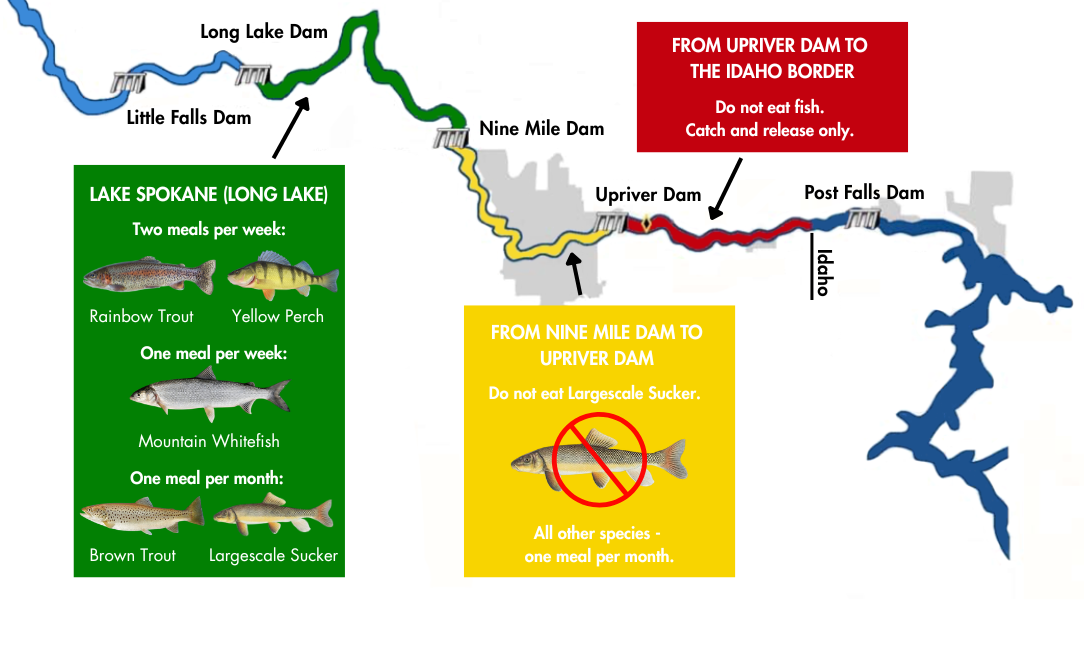
How to clean AND cook fish to reduce contaminants
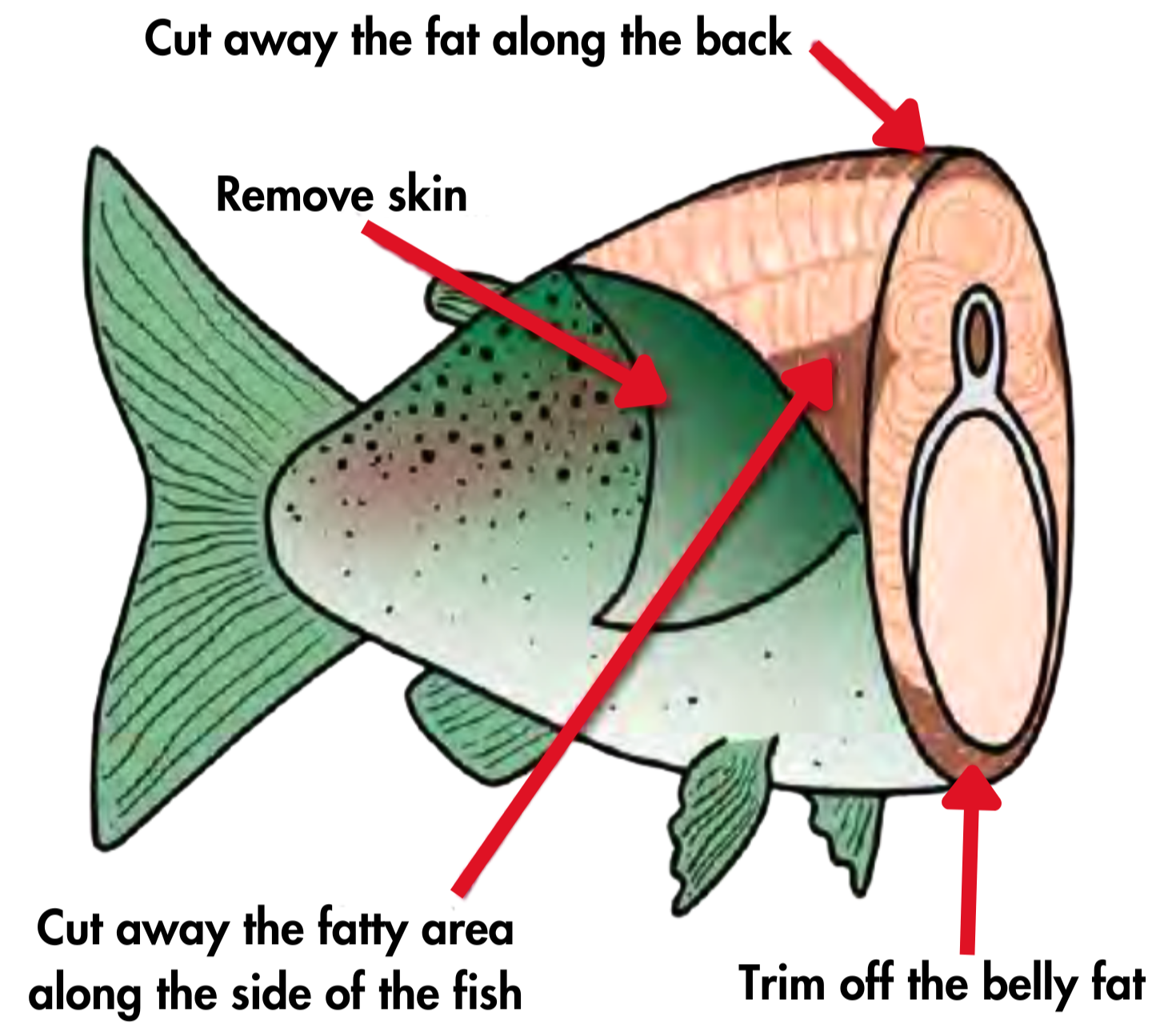
Prepare fish the following way to reduce PCBs and other contaminants that collect in the fatty parts of fish:
Remove the skin, fat, and internal organs.
Cook fish on a rack so the fat drips off while cooking.
Do not eat the juices, bones, organs, fat, skin, head, or guts.
Eat younger, smaller fish.
Spokane River Fish Advisory from Washington State Department of Health
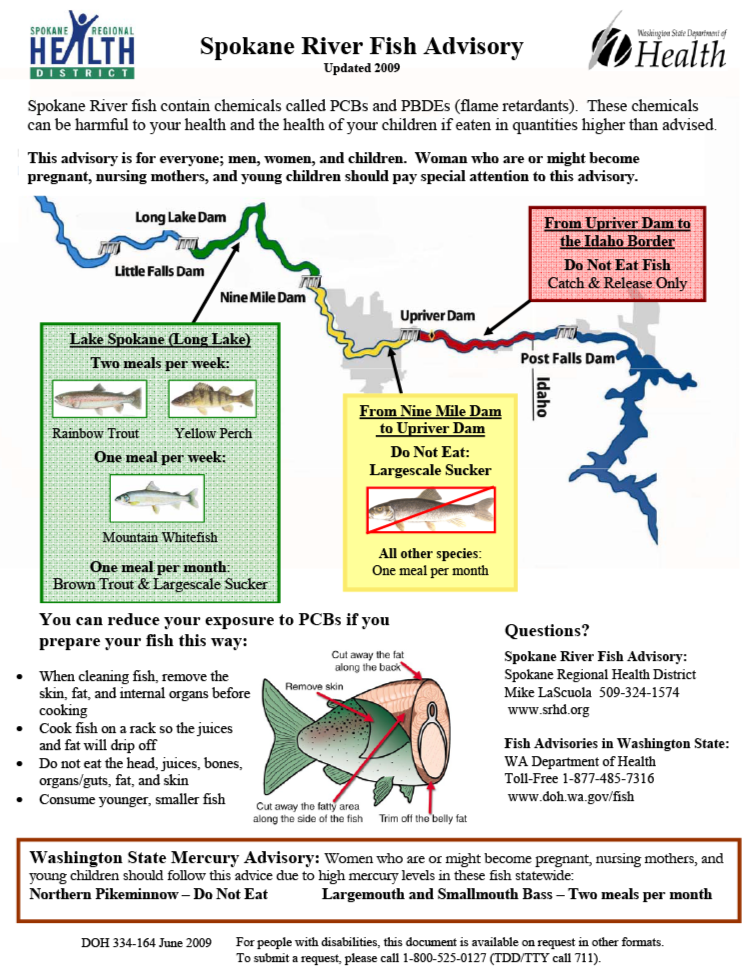
Spokane River Fish Advisory from Washington State Department of Health (English)
Advertencia Sobre la Pesca en el Río Spokane (Spanish)
نشرة إرشادية بشأن الأسماك في نهر سبوكين (Arabic)
스포캔강 어류 섭취 주의보 (Korean)
斯波坎河鱼类食用建议 (Mandarin)
Karoñ Kōn Iik Ko Ilo Spokane River (Marshallese)
Рекомендации по употреблению рыбы из реки Спокан (Russian)
Khuyến Cáo Ăn Cá Sông Spokane (Vietnamese)
Рекомендації щодо вживання риби з річки Спокейн (Ukranian)
Our Work
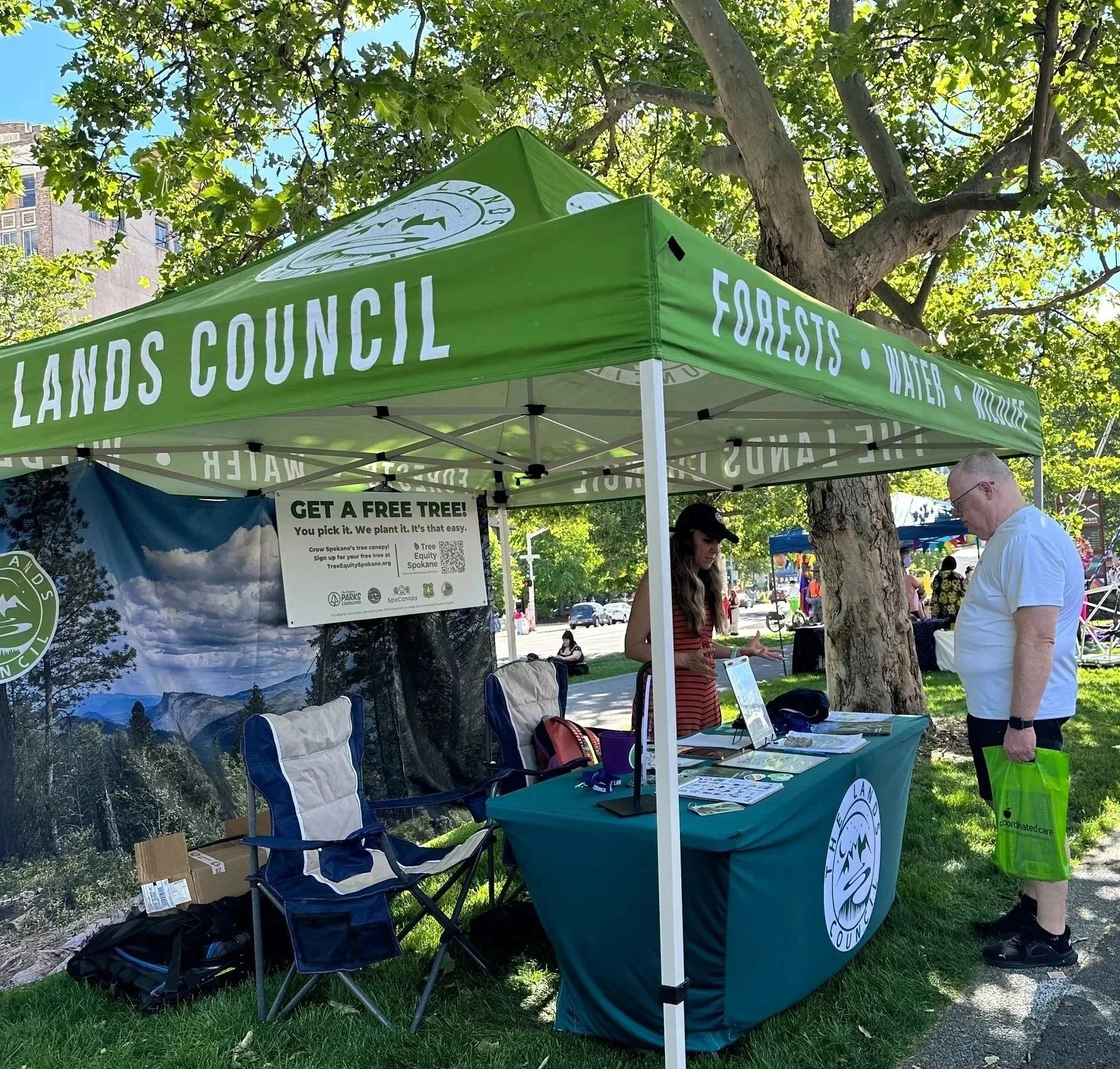
Since 2003, The Lands Council has been educating at-risk communities on the public health risks of Spokane River toxics. In an effort to reduce human exposure to toxics and protect public health, our toxics outreach specialists engage with individuals one-on-one.
Each summer, our team spends time on the river, collects surveys, distributes health advisories, staffs educational tables at community events, and delivers presentations - all with the goal of building awareness of the health risks of PCBs, PFAS, and heavy metals in these communities. Keep an eye out for our team at events around Spokane all summer!
This work is funded in part by a Public Participation Grant from the Washington State Department of Ecology.
Help protect the river
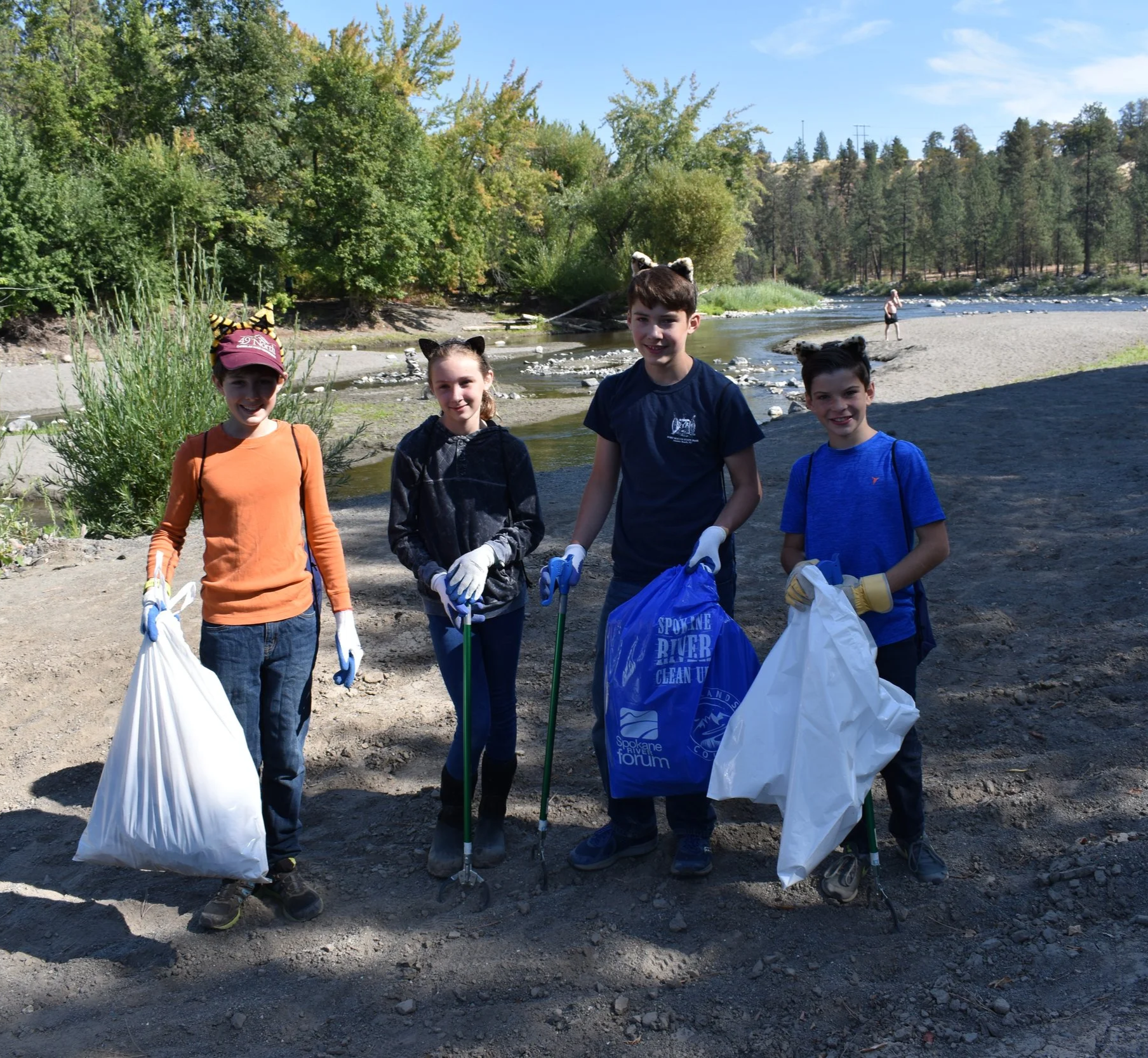
There are many ways you can help protect the Spokane River and our aquifer:
Participate in river cleanups with The Lands Council and Spokane Riverkeeper. The Lands Council hosts a large river cleanup each September.
Help plant trees with The Lands Council or have a tree planted in your yard for free to reduce storm runoff.
Vote in support of policies that keep pollutants out of the river and protect our aquifer.
Conserve water at home and follow watering restrictions each summer.
Additional Resources
Spokane River Water Trail - see where you can launch boats, find restrooms, and go fishing, camping, and swimming.
Toxic Chemicals and Heavy Metals in the Spokane River: A Public Guide (2009)
PFAS Testing Results Dashboard