TAYLOR BIRDTAIL
CLIMATE JUSTICE PROGRAM Director
Profile by Robin Brodt
Land, Language, and Community
Sap̓y̓áx̌n, also know as Taylor Birdtail, moves easily between worlds that many people rarely see as connected: language revitalization, climate justice, community organizing, and Indigenous cultural renewal. To her, these are not separate fields. They are part of the same living system.
Raised in Spokane, Taylor grew up grounded in Indigenous teachings, even though her people—the Gros Ventre—originate from North Central Montana. She works to give back to the communities who helped to raise her within Salish traditions and instilled values that continue to shape her work today: accountability to community, responsibility to future generations, and a deep relationship with land.
“I didn’t grow up disconnected from culture,” she says. “Language, land, and community were always tied together for me.”
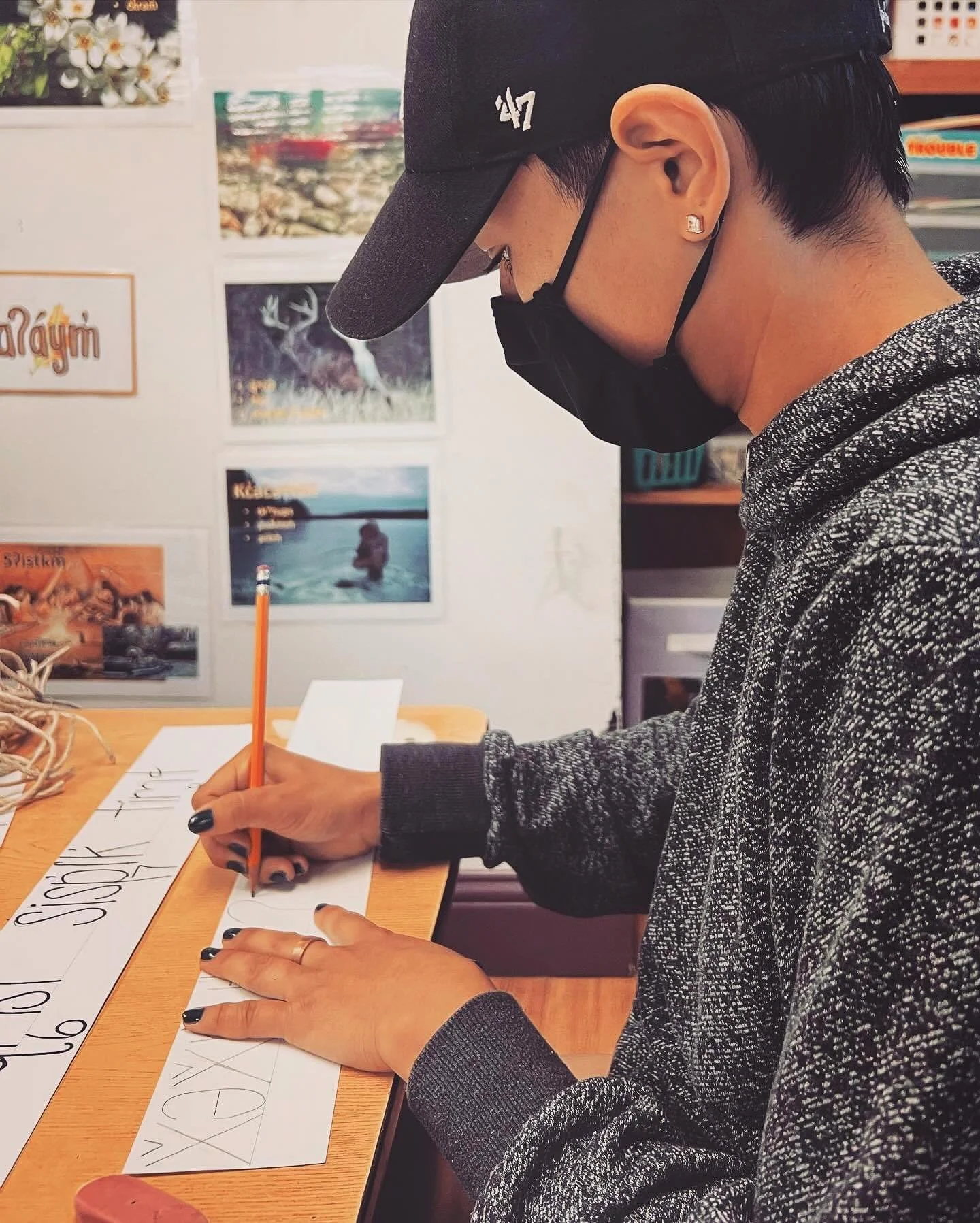
That grounding led her into language revitalization work long before it became widely recognized as essential to cultural survival. At the Salish School in Spokane, she spent years teaching adult learners endangered Indigenous languages—work that relied far more on relationships than on technology. “There isn’t really technology for saving endangered languages,” she explains. “It’s paper, binders, conversation, and being present.”
For much of her career, Taylor taught language courses while supporting community programs and mentoring youth. Her work extended across borders—literally—as she traveled to Canada to teach at Selkirk College on weekends. Her focus was teaching, listening, and holding space.
That changed when she stepped into her current role as The Lands Council’s Climate Justice Program Director.
One year into the position, Taylor found herself navigating multiple calendars, grants, partnerships, and communities all at once. “I hit a moment where I realized—this is the job now,” she says. “I’m everywhere.”
Her work centers on a Washington State Department of Ecology grant tied to the Climate Commitment Act, in partnership with Gonzaga’s Climate Institute. The project focuses on improving air quality in overburdened communities—neighborhoods disproportionately impacted by pollution and environmental harm. Spokane is one of just sixteen areas in the state identified as having especially poor air quality.
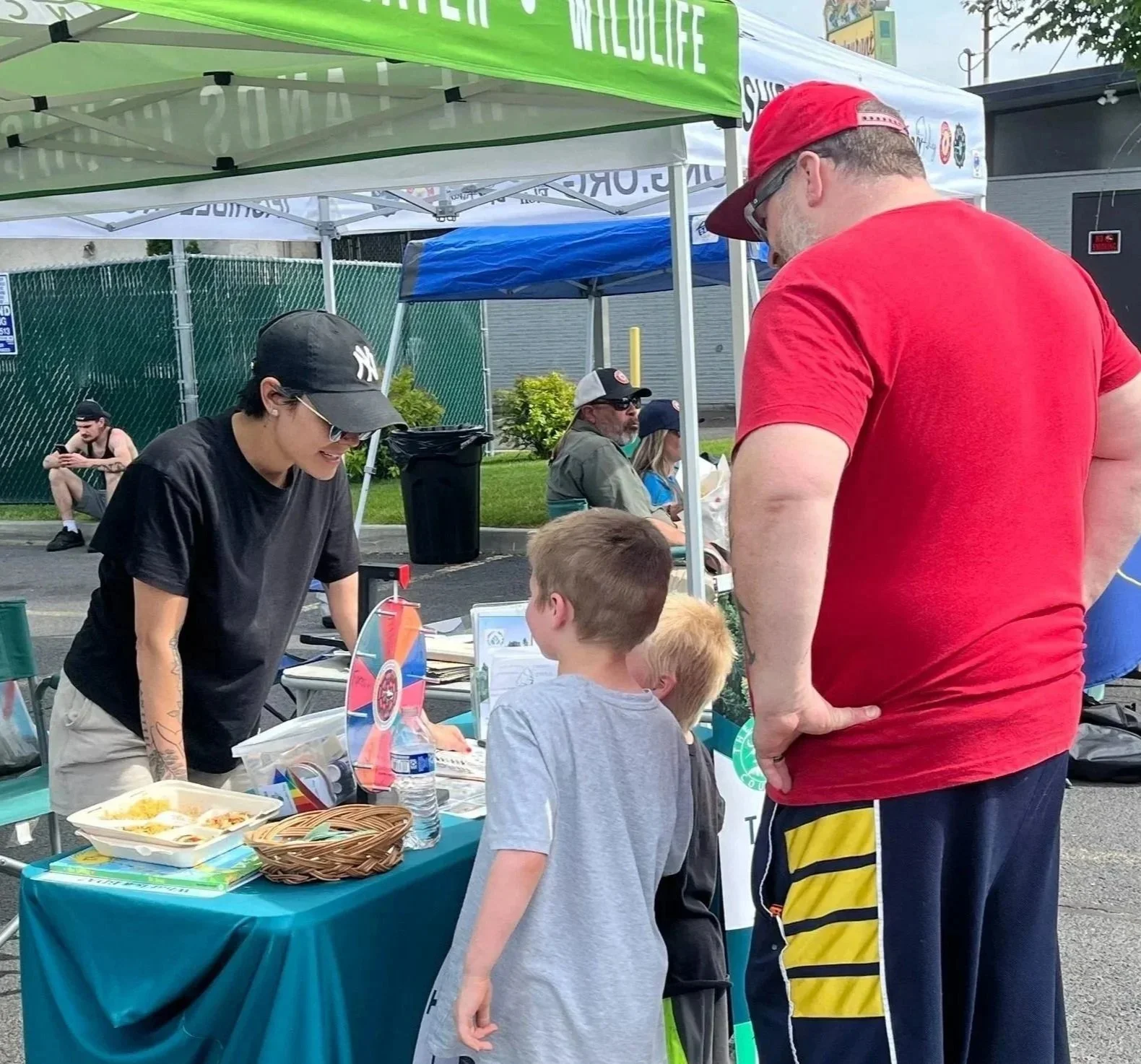
Through the grant, Taylor and her colleagues are distributing hundreds of air purifiers, conducting surveys, and engaging directly with community members most at risk from poor air quality. But for her, the most important part of the work isn’t the data.
“It’s about relationships,” she says. “I don’t want surface-level engagement. I want trust, long-term connection, and real partnership.”
That philosophy comes from Indigenous systems of knowledge, where environmentalism is inseparable from culture. “Climate justice is revitalization,” she explains. “It’s about putting language back into the land, honoring stories, and remembering how our people stewarded these places long before colonization.”
Taylor sees environmentalism as inherently Indigenous—not a scientific abstraction, but a lived practice rooted in ceremony, storytelling, and care. She draws a sharp distinction between state-sanctioned “prescribed burns” and traditional cultural burning. “For us, fire is a relationship,” she says. “There are prayers, songs, and community involved. It’s spiritual, not just technical.”
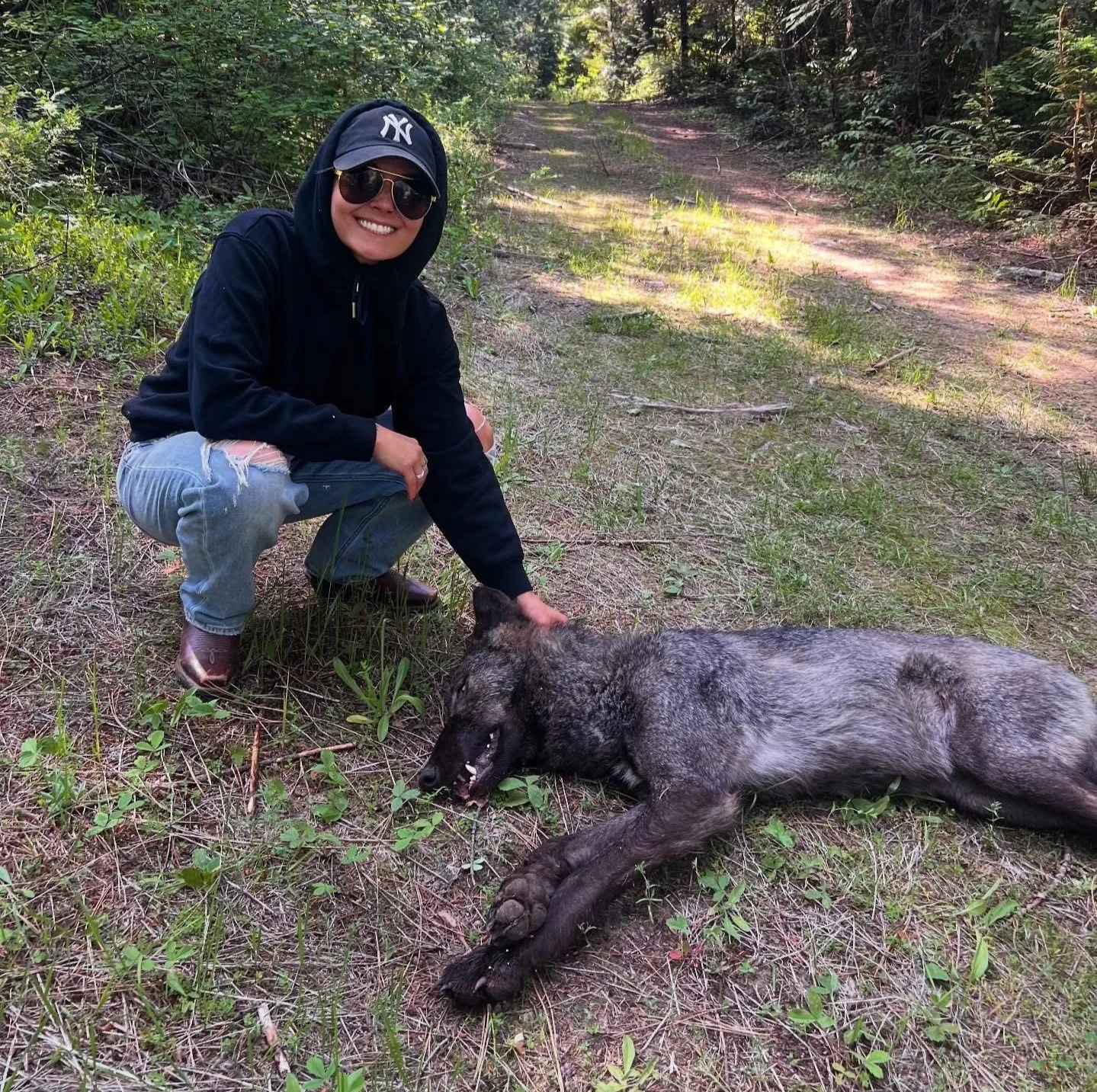
Tagging and collaring a wolf in the Colville National Forest
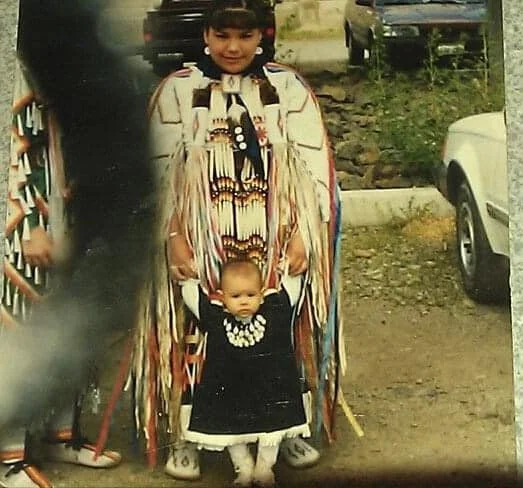
Taylor and her aunt in regalia
Her academic background reflects her interdisciplinary approach. She pursued an associate’s degree in political science from North Idaho College, followed by a bachelor’s degree in political science with a double major in psychology and a certificate in equity and justice from the University of Idaho. She chose psychology intentionally. “I wanted to understand why people behave the way they do, and why systems are the way they are,” she says. “Empathy is a skill. You don’t just wake up with it.”
That empathy shows most clearly in her work with youth.
One of her most powerful teaching spaces is the land itself. During intergenerational Wapato digs—a traditional harvest of water potatoes—children of all ages wade into cold water together. She’s watched kindergarteners cry from being in cold water, only to grow into teenagers who later guide younger siblings through the process, speaking the language fluently as they work.
“That’s revitalization,” she says. “Watching kids grow up and then turn around and teach. That’s how knowledge survives.”
Her identity as a woman in a matriarchal lineage also informs her leadership. “Knowing your power and not letting anyone silence you—that’s revitalization too,” she says. At the same time, she emphasizes balance. “Matriarchy isn’t about overpowering men,” she explains. “It’s about accountability and care.”
A quote she lives by comes from boxing culture, which runs deep in her family: “I don’t want to hear it. I want to see it.”
That principle guides everything she does. “You can’t say you’re doing climate justice and never show up,” she says. “You have to plant the trees, support the burns, be in community. Another body matters more than another email.”
Looking ahead, Taylor wants to emphasize collective empowerment. “I don’t want to be the voice,” she says. “I want to amplify the voices already doing the work.”
For Taylor, the future isn’t about innovation for its own sake. It’s about remembering—bringing language back to land, reconnecting people to place, and rebuilding systems based on care, responsibility, and community.
“You don’t get to opt out of showing up,” she says. “That’s how we’ve always survived.”